|
Getting your Trinity Audio player ready...
|
Knee Cartilage Damage (Meniscus Tear)
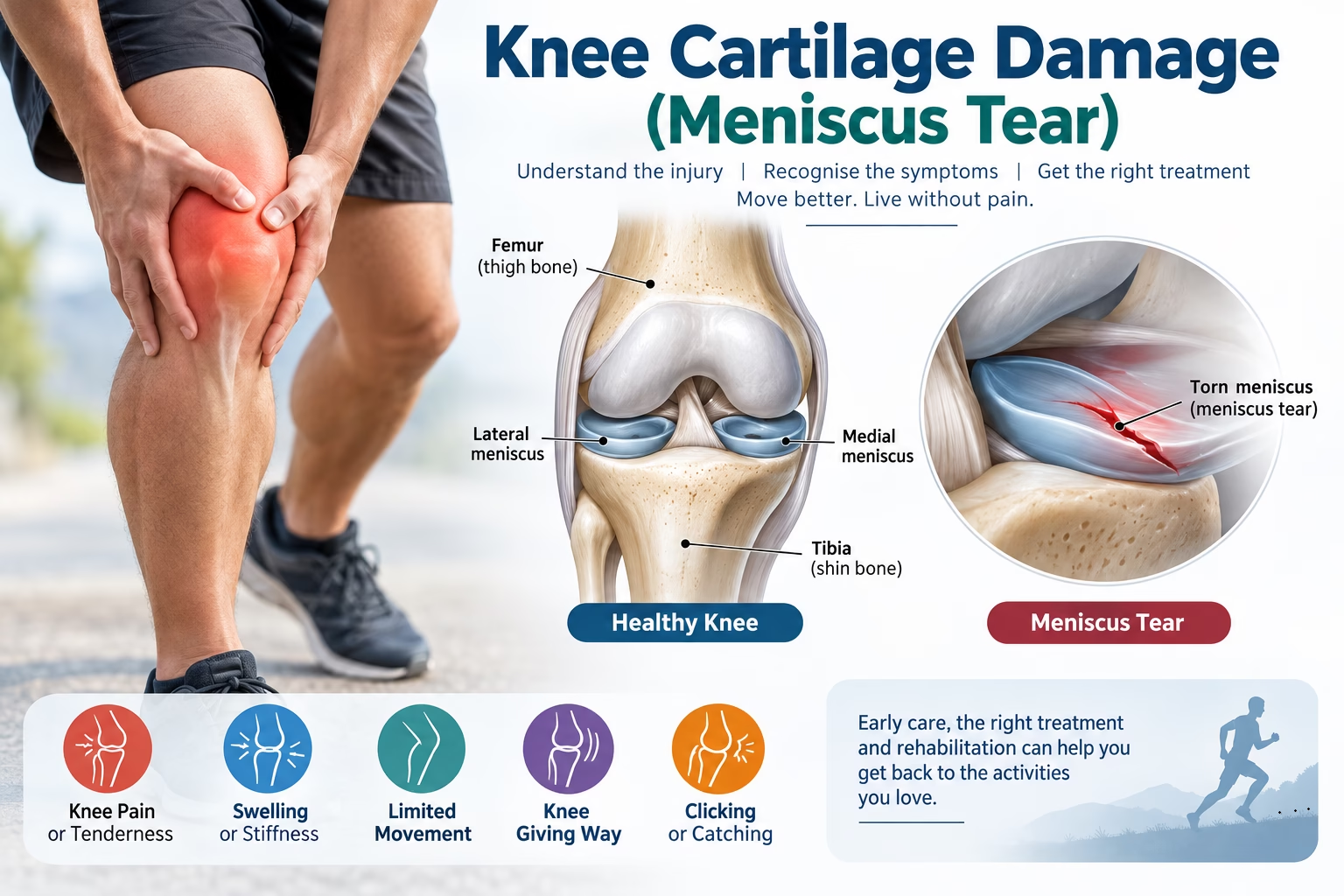
A meniscus tear is one of the most common types of knee injuries. The menisci are crescent-shaped pieces of tough, rubbery cartilage located between the thigh bone (femur) and the shin bone (tibia). Each knee has two menisci — a medial and a lateral — which act as shock absorbers, stabilise the joint, and help distribute body weight during movement. Damage to this cartilage can cause pain, swelling, and difficulty moving the knee, and often results from twisting injuries or sudden impact.
Meniscus tears can affect people of all ages. Athletes who play sports involving quick turns, pivoting, or sudden stops are particularly at risk, but tears can also occur from minor movements, especially in older adults whose cartilage has weakened over time.
Understanding What a Meniscus Tear Is
A meniscus tear occurs when the cartilage is stressed beyond its limits. The cartilage may rip partially or completely, and the tear can be located in different parts of the meniscus. Some tears may heal on their own, especially those in the outer edge where there is a good blood supply. Others, particularly those in areas with poor circulation, may require physiotherapy or surgery.
Meniscus tears are often classified based on the pattern of the injury. Common types include:
- Vertical tear – often caused by sudden twisting.
- Radial tear – a tear across the width of the meniscus.
- Bucket-handle tear – a large tear where part of the meniscus becomes displaced.
- Horizontal tear – often related to degeneration.
- Flap tear – where a portion of the cartilage lifts up.
The severity and location of the tear influence the symptoms, healing potential, and treatment options.
Symptoms of a Meniscus Tear
A tear typically occurs when you twist your knee while the foot is planted on the ground — for example, when playing football, basketball, or running. But it can also happen during everyday activities, such as twisting while standing up or carrying heavy loads.
Common symptoms include:
- Knee Pain or Tenderness
Pain may be sharp at the moment of injury, followed by a more constant ache. Pain is often felt along the joint line on either the inner or outer side of the knee.
- Swelling or Stiffness
Swelling may develop soon after injury, although in some cases it appears hours or even days later. The knee can feel stiff, warm, or puffy.
- Limited Movement
You may find it difficult to bend or straighten the knee fully. Movements may feel restricted or painful.
- Knee Giving Way
Some people experience the knee “giving way” or feeling unstable when they try to stand or walk.
- Clicking or Catching
A torn piece of cartilage may catch in the joint, causing clicking, locking, or a sensation of the knee getting stuck.
Since symptoms can resemble those of sprains or ligament injuries, proper assessment is important.
First Aid: How to Ease Symptoms
For the first few days after injury, simple self-care measures can significantly reduce discomfort and swelling.
What You Should Do
- Rest your knee – Avoid putting too much weight on it and stop any exercise, especially during the first few days.
- Apply ice – Use an ice pack or frozen peas wrapped in a towel for up to 20 minutes every 2–3 hours.
- Use compression – Wrap a bandage or wear a knee support to reduce swelling (remove when sleeping).
- Elevate the leg – Keep your knee raised on a pillow whenever possible.
- Take painkillers – Paracetamol can help reduce pain.
What to Avoid
- Avoid heat packs or hot baths early on, as heat can worsen swelling.
- Avoid alcohol, which can increase bleeding and swelling.
- Do not massage the knee during the acute phase.
- Avoid heavy lifting or activities that put stress on your knee.
- Do not stop movement completely – after a few days of rest, begin gentle knee movements to prevent stiffness.
A pharmacist can advise you on suitable supports and pain relief options.
When to See a Doctor
Not all meniscus tears require urgent care, but you should seek medical advice if symptoms persist or worsen.
See a GP if:
- Knee pain is interfering with daily activities or sleep.
- Symptoms are not improving after treating it at home.
- Pain keeps coming back.
- Your knee remains stiff for more than 30 minutes after waking.
Urgent GP Appointment If:
- You have very severe knee pain after an injury.
- You cannot walk or put weight on the knee.
- The knee is swollen, hot, or red.
- You feel generally unwell with fever or chills.
Go to A&E Immediately If:
- Your knee has moved out of place or is visibly deformed.
- You heard a crack at the time of injury.
- There is tingling, numbness, or loss of sensation in the leg, knee, or toes.
Do not drive yourself to A&E. Bring a list of any medications you take.
Diagnosis
A GP or physiotherapist will assess your symptoms, examine your knee, and may perform movements that test stability and identify which part of the meniscus is affected. If needed, further tests may include:
- MRI scans – the most accurate imaging for diagnosing meniscal injuries.
- X-rays – to rule out fractures or arthritis.
- Ultrasound – sometimes used to examine soft tissue injuries.
Treatment for a Meniscus Tear
Many meniscus tears heal naturally with time and proper care. The treatment approach depends on the type, location, and severity of the tear, as well as the patient’s age and activity level.
- Conservative (Non-Surgical) Treatment
This includes rest, ice, compression, elevation (RICE), and painkillers. Over weeks, swelling reduces and movement improves.
A physiotherapist can:
- Improve range of motion
- Strengthen the quadriceps and hamstrings
- Restore stability
- Reduce pain and swelling
- Help prevent future injury
Exercise therapy is often crucial for full recovery.
- Surgical Treatment: Arthroscopy
If conservative treatment does not help or the damage is severe, arthroscopy may be recommended. This keyhole procedure involves inserting a small camera into the joint. Depending on the injury, the surgeon may:
- Trim the torn portion of the cartilage (partial meniscectomy)
- Repair the tear using sutures
- Remove loose fragments
Surgery is usually a day-case procedure with relatively quick recovery, although full rehabilitation may take weeks or months depending on the repair.
Self-Referral Services
In some areas, you may be able to refer yourself for physiotherapy or musculoskeletal services without seeing a GP first. You can check:
- Your GP surgery website
- Local integrated care board (ICB) information
- NHS directories for musculoskeletal physiotherapy services
Reception staff at your GP practice can also guide you.
Recovery and Rehabilitation
Recovery time varies:
- Minor tears may heal in 4–8 weeks.
- Larger tears or surgical repairs may take 3–6 months.
Completing the full physiotherapy plan is essential to restoring strength and preventing reinjury.
Prevention Tips
While not all injuries can be prevented, you can reduce your risk by:
- Strengthening thigh and calf muscles
- Maintaining flexibility
- Warming up before exercise
- Using proper footwear
- Avoiding sudden increases in training intensity
Summary
A meniscus tear is a very common form of knee cartilage damage, often caused by twisting or sudden movement. Symptoms include pain, swelling, stiffness, clicking, and instability. While some tears heal naturally, others require physiotherapy or surgery. Early rest and care can improve recovery, but persistent or severe symptoms need medical attention. With proper treatment, most people recover well and return to normal activities.
Medical Disclaimer:
This article is intended for general educational purposes only and should not be considered a substitute for professional medical advice, diagnosis, or treatment. If you have severe knee pain, significant swelling, inability to bear weight, locking, or symptoms following a serious injury, consult a qualified healthcare professional promptly.