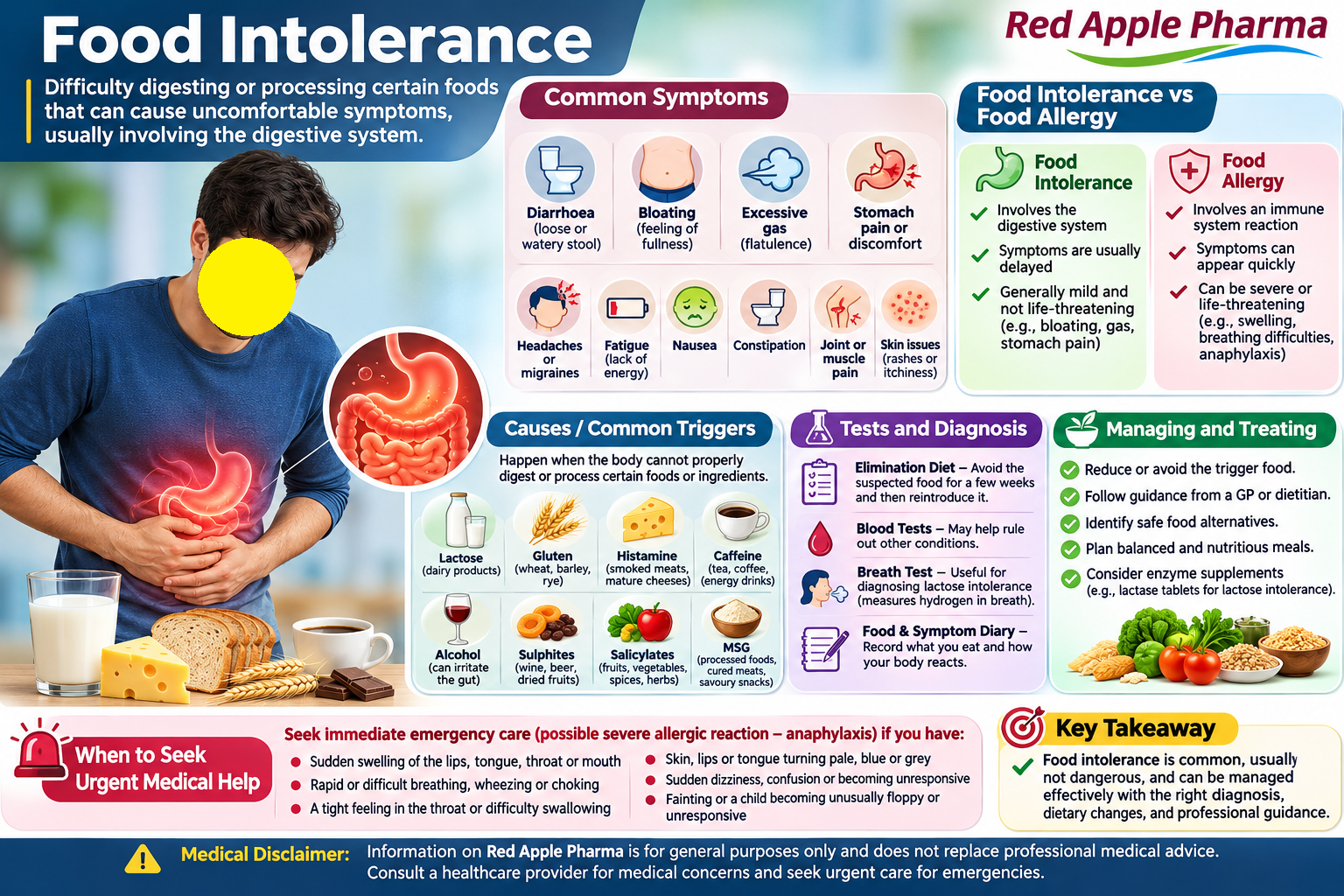
Food Intolerance
Food intolerance refers to difficulty digesting or processing certain foods or ingredients. Unlike a food allergy, which involves the immune system, a food intolerance usually relates to the digestive system and how your body handles specific substances. Although it is generally not dangerous, consuming foods that your body struggles to break down can lead to considerable discomfort and a range of unpleasant symptoms.
Understanding the Symptoms of Food Intolerance
Symptoms of intolerance do not typically appear immediately after eating. Most people notice issues a few hours after consuming the problematic food, although in some cases, symptoms may be delayed even longer. The severity and type of symptoms can vary from person to person and depend on how much of the food was eaten.
Some of the most common signs of food intolerance include:
- Diarrhoea: A loose or watery stool that occurs as the digestive system tries to expel the irritating substance.
- Bloating: A feeling of fullness or swelling in the abdomen caused by excess gas or slow digestion.
- Excessive gas (flatulence): Often due to fermentation of undigested food in the gut.
- Stomach pain or discomfort: Cramping, sharp pain, or general discomfort in the abdominal area.
However, food intolerance symptoms are not limited to digestive issues alone. Many people report additional symptoms such as:
- Headaches or migraines
- Fatigue or lack of energy
- Nausea
- Constipation
- Joint or muscle pain
- Skin issues such as rashes or itchiness
These symptoms may last for several hours and, in some cases, can linger for days after the trigger food has been eaten.
How Food Intolerance Differs From a Food Allergy
Although the two are often confused, a food intolerance is very different from a food allergy. A food allergy involves the immune system reacting to a food as if it were harmful. This can cause immediate and potentially life-threatening symptoms, such as swelling, breathing difficulties, or a sudden drop in blood pressure. Food intolerances, on the other hand, do not involve the immune system and usually cause milder, non-life-threatening digestive or general symptoms.
If you or your child repeatedly develop symptoms after eating certain foods, it’s a good idea to speak to a GP. A healthcare professional can help determine whether the issue is intolerance, allergy, or something else entirely.
When to Seek Urgent Medical Help
Although food intolerances themselves are not dangerous, the symptoms listed below suggest a severe allergic reaction (anaphylaxis), which requires immediate emergency care.
- Sudden swelling of the lips, tongue, throat, or mouth
- Rapid or difficult breathing, wheezing, choking, or gasping for air
- A tight feeling in the throat or difficulty swallowing
- Skin, lips, or tongue turning pale, blue, or grey (on darker skin, this may appear clearer on the palms or soles)
- Sudden dizziness, confusion, extreme tiredness, or becoming unresponsive
- Fainting that does not improve
- A child becoming unusually floppy, unresponsive, or unable to lift their head
A swollen, raised, or extremely itchy rash may also accompany these symptoms. These are all signs of a serious allergic emergency and must be treated in hospital.
Causes of Food Intolerance
Food intolerances occur when the body cannot properly digest or process certain foods or ingredients. This may be because the digestive system does not produce enough of a particular enzyme, or because the food triggers chemical reactions in the gut.
One of the most well-known intolerances is lactose intolerance. Lactose is a sugar found mainly in dairy products like milk, cheese, and yoghurt. People with lactose intolerance lack sufficient levels of lactase, the enzyme needed to break down lactose. As a result, lactose remains undigested in the gut, causing gas, bloating, and diarrhoea.
However, lactose is not the only culprit. People can develop intolerances to a wide range of foods and substances, including:
- Gluten (found in wheat, barley, and rye): commonly associated with bread, cereals, and pasta
- Histamine: present in foods such as smoked meats, mature cheeses, and certain alcoholic drinks
- Caffeine: found in tea, coffee, energy drinks, and some sodas
- Alcohol: which can irritate the digestive system in some individuals
- Sulphites: preservatives used in wine, beer, cider, and some dried fruits
- Salicylates: naturally occurring chemicals found in fruits, vegetables, spices, and herbs
- Monosodium glutamate (MSG): found in some cured meats, processed foods, and savoury snacks
Unlike allergies, which involve the immune system overreacting, intolerances tend to cause chronic but non-dangerous symptoms. This means they cannot cause life-threatening reactions such as anaphylaxis.
Tests and Diagnosis
If your GP suspects that you may have a food intolerance, they may refer you to a dietitian—an expert in nutrition—who can help identify the cause and guide you through appropriate management strategies.
Diagnostic methods may include:
- Elimination Diet:
You avoid the suspected food or ingredient for a few weeks to see if symptoms improve. After this period, the food is reintroduced to observe whether symptoms return.
- Blood Tests:
Although blood tests cannot diagnose all intolerances, they may help rule out other conditions.
- Breath Test:
Particularly useful for diagnosing lactose intolerance. The test measures hydrogen levels in the breath, which rise when lactose is improperly digested.
You might also be asked to keep a food and symptom diary, noting what you eat and how your body reacts. This can help identify patterns and possible trigger foods.
Be Cautious About Home Testing Kits
A variety of home-testing kits are marketed as ways to diagnose food intolerances. However, many of these tests lack scientific evidence and can give misleading results. They may suggest avoiding many foods unnecessarily, which could lead to nutritional deficiencies. For this reason, healthcare professionals do not recommend relying on these tests.
Managing and Treating Food Intolerance
Treatment generally involves reducing or avoiding the food you cannot tolerate. Some people need to remove the food entirely, while others can still consume small amounts without experiencing symptoms.
However, it’s important to make dietary changes under guidance from a GP or dietitian—especially for children. Removing certain foods without proper advice can result in missing essential nutrients, vitamins, or minerals that are needed for healthy growth and development.
A dietitian can help you:
- Identify safe alternatives
- Plan balanced meals
- Ensure your diet remains nutritious
- Avoid unnecessary restrictions
In some cases, enzyme supplements (such as lactase tablets for lactose intolerance) may help the body digest specific substances.
Conclusion
Food intolerance can cause a range of symptoms that affect your digestion, energy levels, and overall comfort. Although not dangerous, it can significantly impact daily life if left unmanaged. With the guidance of healthcare professionals, most people can identify their triggers and adapt their diet safely. Understanding the difference between intolerance and allergy is crucial, as allergic reactions can be life-threatening and require immediate care. Through a combination of medical support, dietary adjustments, and careful monitoring, individuals with food intolerance can continue to enjoy a healthy and varied diet without unnecessary discomfort.
⚠️ Medical Disclaimer:
Information on Red Apple Pharma is for general purposes only and does not replace professional medical advice. Consult a healthcare provider for medical concerns and seek urgent care for emergencies.
